Showing posts with label Garden/Landscape. Show all posts

Monday, March 31, 2008

Home Renderings, Volume 3

(Brendan)

Now we move on to a view from the front of the home. This view is interesting not only because it's of the front, but because it contains a few design changes as well. Here it is, click to enlarge.
Beautiful, isn't it? Landscape-wise, my brother thought we should have apple trees or some other flowering tree in the enclosed wall in front of the house, and we really like that concept. I think we'll definitely go with apple trees, and stay on top of trimming them so they don't get too large. He added that little door in the wall so that you can go in and tend the other plants in there, and also to pick apples. It's kind of monastic!

Also, he thought that a good way of transitioning from lawn to wooded area was with wild flowers. It's also low maintenance, which I had requested of any landscaping. Our current home has too much landscaping and it takes an incredible amount of time and effort to take care of it all. We'll probably have more lawn that what is shown here, but I like the concept, especially how the flowers go right up to the house.

Structure wise there are other changes you can see. First, there are new forms of windows on the lower level. The front entrance and the clusters of windows to either side are meant to be a family of similar forms, and there are now only three windows on the upper level which are aligned with the clusters on the lower level. This eliminates yet another window on the upper level for cost and I think aesthetics are still preserved. Also, there used to be brick that went all the way up the southern face of the main volume of the home, which my brother said he didn't end up liking once it was rendered. So now the brick on that face is limited to being even with the brick on the front, and a small brick face is added on the secondary volume of the home to continue the small brick wall into the hillside to the right.

Monday, October 29, 2007

Stations of the Cross can be included in any home

(Brendan)

You don't have to build a brand new home with a chapel, or even reconstruct your current home, to add beauty and sanctity to your home that will assist with family and individual prayer. The fourteen Stations of the Cross, one of the oldest methods of prayerfully contemplating the suffering of Christ in His passion and death, can be added in a hallway, a room, or even in landscaping or along a pathway outdoors. Instead of praying the Stations only during Lent, they can be a regular part of prayer all year and even be beautiful artwork for your home. If you would like more info on the Stations, here's a history of the Stations of the Cross (or "Way of the Cross"), and here's a good online version. Here's an article about the use of the Stations of the Cross in the domestic Church.

Stations of the Cross All Year

BY JOSEPH PRONECHEN

July 15-21, 2007 Issue | Posted 7/10/07 at 3:43 PM

The 14 Stations of the Cross are depicted in churches and shrines everywhere. They’re among the most popular Christian devotions. They help us make a spiritual pilgrimage, contemplating Christ’s passion as we hike along the Via Dolorosa in our hearts.

So why confine praying the Stations to the 40 days of Lent?

Families are discovering that observing this powerful devotion all year long — at home — can yield beautiful benefits for parents and children alike.

Just ask Greg and Tina Andress of Spartanburg, S.C. Earlier this year they cleared a trail through the woods on their property and installed outdoor Stations of the Cross.

First meant as a family project, the effort quickly drew in members and dads from the local ConQuest Catholic boys’ club that meets in the Andress home.

The Stations improved as they moved from idea to execution. Originally, Greg planned on using photos the family saw at Holy Hill, a Wisconsin Marian shrine. Then a neighbor donated icon-type Stations for the Andress’ trail. The ConQuest boys assembled the cedar and roof housings with their fathers’ help, then attached them to sturdy wooden poles.

The week before Good Friday, the family’s pastor at Jesus Our Risen Savior Church blessed the trail and Stations before everyone present prayed them for the first time.

“Now we’d like to continue to pray the Stations throughout the year to keep what Christ did for us in our children’s minds,” says Tina. Their initial goal is to pray the outdoor Stations twice a month as a family.

The trail and signposts may be new to the Andress family, but the idea of praying the Stations throughout the year isn’t. Along with their three boys and two girls, ages 9 to 1 (a sixth child is due in August), Greg and Tina are always looking for ways to walk with God between Sundays.

Their home-school curriculum includes a strong Catholic component, and the home has displayed the Stations — in the form of small pictures — for years.

“We had a small hallway, short and narrow, but it worked fine,” explains Mom Tina. “With the beautiful, old-style pictures, the children could visualize what Christ’s passion was like. We’d spend time for them to ask questions, like ‘Why is that lady wiping Jesus’ face with towel?’” It was in small and simple ways like this, she points out, that “the kids developed a great love for Christ at a very early age.”

In Greenfield, Ind., John and Rosie Kube have also made the Stations of the Cross at different times of the year at home with their four girls, ages 11 to 5. When they did, explains John, “We take turns with the kids leading the way to different icons, statues of Jesus, and religious pictures in our house, and reading a meditation. We leave it up to the kids. They sometimes dress up with veils like a nun.”

Rosie adds how the devotion benefited her mother-in-law Marie who when battling cancer relied heavily on praying the Stations every day.

“That was a comfort to her,” Rosie says. “I was so struck by it.”

The Kubes can also frequent the outdoor Stations at nearby Our Lady of the Apostles Family Center. And after a men’s conference John and a friend attended, they began a neighborhood Stations of the Cross walk during Lent.

Children get into the act helping erect each station on different families’ property, and the local Challenge girls club members like the Kubes 11-year-old evangelize door to door, inviting neighbors to join in the community Stations. Even Protestants attend.

Wherever we pray the Stations of the Cross, they’re meant to help us make a pilgrimage in spirit to main scenes of Jesus’ suffering and death. To aid all Christians who couldn’t get to the Holy Land to walk the Via Dolorosa, the Franciscans in the 17th century began erecting the Stations in churches and promoting the devotion.

“The more we do the Stations the more we’re reminded that Jesus remained faithful, no matter what happened,” says Franciscan Father Jacob-Matthew Smith of the Order of Friars Minor at the Commissariat of the Holy Land in Washington, D.C. “If we could put ourselves in his shoes, then each one of these stations have a personal meaning for the individual.”

Out of many ways of doing the Stations, one he recommends that even children can do is to relate each Station to our life. It’s a way to follow in the footsteps of Jesus.

“By so doing we join in the passion and death of Christ,” says Father Jacob-Matthew. For a child, the first fall of Jesus might be tied to the times the child has fallen off a bike while learning to ride. “Each time we’ve got to have the courage to get back in the seat and peddle again.”

Tina Andress finds the devotion to the Passion gives many lessons and helps her teach them to the children. For starters, she says, “Jesus offered his pain up for the salvation of the world. I tell the children you can offer your pain up for something. Don’t waste the opportunity. They understand. Even as parents, there are so many lessons for Greg and me to learn.”

Father Jacob-Matthew agrees. Mothers can put themselves in Mary’s position and see how they would respond to their own child in knowing God has work for them to do, maybe having to put their life on the line — mothers with a child in the armed forces, for instance.

Tina focuses on how Mary as a wife and mother teaches us to accept God’s will every day of the year.

“In my life as a mother,” she says, “I have to accept and respond with love, composure, sacrifice, prayer, and acceptance of God’s will.”

As for the youngsters, Tina affirms even if they look like they’re not listening, they still see the Stations and hear the prayers with the family.

“They can still get something out of it,” she says from much experience.

Indeed, 5-year-old Peter focuses on Jesus’ falls. “It’s sad,” he says. “It teaches me to be good.”

He likes following the Stations “because Jesus is in my heart and I love him,” Peter says, “and because it makes me feel holy.”

His 9-year-old brother Jacob looks forward to praying the Stations “because you’re walking with Jesus,” he says. “It helps you get close to God.”

Dad Greg believes that doing the Stations as a family is something the children will learn and remember.

Now that the Stations are outside too, he thinks it will be even easier to do them with the children and lead to making them together on Fridays, their spiritual goal like praying the Rosary at night.

“The children use that trail to ride their bikes,” says Greg, “so they go by the Stations and can’t help think about them.”

In church or at home, indoors or even in a small yard, there’s proof positive that for all of us the Stations of the Cross should be a year-round devotion.

Tuesday, October 23, 2007

Something to consider when designing garden areas...

(Brendan)

I came across another interesting article in the National Catholic Register on designing a monastic garden for one's home, including the spiritual significance that has been designed into such gardens through the ages. Really fascinating. I can't say I've thought much about our garden and landscape areas for our new home, mostly because I assume we may not be able to afford to put money into those areas for the first years. But I have experience maintaining large amounts of landscaping (we inherited huge amounts of landscaping from the previous owners of our current home) and I'm a do-it-yourself kind of guy for outdoor stuff. So it may be something that can be done slowly over time.

Here's a few examples of monastic cloister gardens:

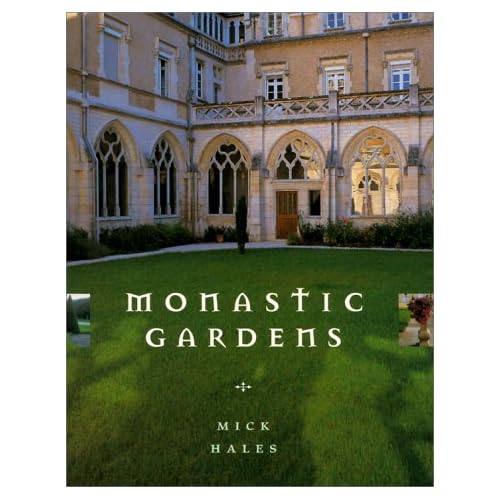
And here's a book on Amazon.com that I may have to purchase (link):

Here's the article I referred to:

God in the Greenery

You don’t need a monastery to have a monastery garden

BY JOSEPH PRONECHEN

June 11-17, 2006 Issue | Posted 6/12/06 at 9:00 AM

Centuries before Americans took to gardening as a hobby, St. Benedict, the great founder of Western monasticism, made gardens important in his monasteries.

Most flowers, plants and herbs were for everyday use, but the monks would admire them just as much for their religious and symbolic meaning as for their natural beauty. Gardens became little daily catechisms.

Catholic families can take a lesson from the Benedictine monks and other monastic orders and create their own medieval-style monastery garden for prayer and meditation — not to mention teaching the faith to children and visitors.

Since many plants also reflect aspects of the Blessed Mother, a monastery garden can be a perfect companion to a Mary garden.

Imagine picking up a simple viola tricolor, which we now popularly call the Johnny Jump Up, to meditate on the Blessed Trinity or to explain how the persons of the triune Godhead come together as one.

For medieval monks, the three colors symbolized the Holy Trinity, the purple also standing for Christ’s passion — another opening for meditation.

Back then, this flower was called both the Herb Trinity and also Our Lady’s Delight to recall how Mary delighted in contemplating the Trinity revealed first to her at the Annunciation.

Breathe in the fragrance and revel in the color of the lovely lavender herb — a perfect opening to talk about how monks knew it as Mary’s Drying Plant. Legend had it that lavender received its fragrance after Mary spread Jesus’ clothes on it to dry. That can lead to shared meditation on daily duties the Holy Family also carried too.

Lavender was also called Our Lady of Purity because it was believed to preserve chastity.

Often the herbals had a combination of medicinal value, religious symbolism and culinary use for the monks. Gardens also provided flowers for the altar.

“For something we think humble and mundane,” says horticulturist Susan Moody, “people thought about and linked flowers in ways we may not link them today.”

Moody, who oversees the recreated medieval monastery gardens at The Cloisters museum in Manhattan, points out that, even with the bitter dandelion, there’s a connection to the passion of Christ.

“St. Benedict talks about living the whole day in the awareness of God’s presence,” reminds Benedictine Father Edward Glanzmann of the Monastery of the Holy Cross in downtown Chicago. “Ideally, all the time different parts of the monastery help point to that — in the field, gardens, in nature, in prayer, in church.”

Having a type of monastery garden would make a natural occasion for the parents to talk with the children about the faith, he says.

“It would provide a wonderful alternative to quiet the children and the whole family down for prayer,” adds Father Glanzmann. “It can also provide the family the same opportunity it provides the monks and retreatants here who focus their attention on the beauty and the delicacy of the garden. One would want to move from there to thoughts of God.”

The monastery’s own cloisters garden for monks and a similar one for guests are serene oases for prayer and contemplation right in downtown Chicago. There’s a statue of the Blessed Mother, roses and flowers that bloom through the year, a park bench and lawn.

Fruits of the Faith

According to Professor Martin McGann at Penn State’s Center for Medieval Studies, cloisters often had seats constructed in their surrounding wall. Monks could sit under the covered walkway and look into the garden.

He says plants with white flowers, such as the Rosa Alba, a medieval plant, were important.

Then the white and gold of the Madonna Lily symbolized Mary’s purity. After appearing in paintings of the Annunciation, it also got the name Annunciation Lily.

Although families might not use its roots to make a soothing poultice for aches as the monks did, they can surely be inspired by this lily to talk about the visit of the angel, Mary’s fiat, and Jesus’ incarnation for our salvation.

Certain staples in the garden had strong spiritual connotations to bring good and drive away evil. Chief among them was Lady’s Mantle, which reminded monks how our Blessed Mother protects us under her mantle.

Another cue worth emulating from the Monastery of the Holy Cross: a kitchen garden that feeds monks and guests most of the year.

“This helps to capitalize on what St. Benedict wrote in the Rule,” says Father Glanzmann. “Each monastery should be self-sufficient and grow its own food. Some families can do that as well.”

Like of old, flowers are interspersed with the vegetables themselves. Tulips and early spring veggies, for example, make fine companions.

Strawberries make good companions with flowers, too. And the sweet treats have religious significance. McGann says their three leaves stand for the Trinity.

Being a flower and a fruit at the same time, the strawberry symbolizes Mary’s perpetual virginity and was named Fruitful Virgin, something families can discuss while picking ripe strawberries for dessert.

Green Thumbs

According to Moody, raised beds for gardening originated in monasteries. Families can plant in herbs and vegetables common for the monks, like leeks, chives and onions in their raised beds.

Working in the garden together also put into practice Benedict’s dictum of Ora et Labora (prayer and work). Gardening was a form or prayer and contemplation mixed with labor.

Even though families don’t live in a cloister, they can adapt another medieval monastery garden, the garth garden.

Moody describes the fairly geometric layout where paths crisscross at a central fountain and divide the four squares. Early monasteries would have a fruit tree growing in each of squares and often fragrant plants as well as a lawn.

The water recalls baptism, the waters of eternal life, and the cross paths recall Christ’s death and our salvation.

This well-used medieval cloister garden is related to plans for the ninth-century St. Gall monastery in Switzerland that planned an ideal monastery after St. Benedict’s Rule.

The Middle Ages may be far back in the Church’s memory, but even modern Catholics can reap the blessings and benefits monks knew so long ago through their beloved gardens.

In such a simple way, a monastery-style garden can provide families with “the contemplative experience, which is to see and feel and live in the presence of God all around you at all the time,” says Father Glanzmann. “By and large, that’s the call of every Christian.”